
- U.S. labor-market data showed job growth slowing sharply from the previous month, though wages are still rising at a solid pace. Inflation may not prove to be a problem in the second half of the year, provided tensions in the Gulf remain subdued.
- Inflation in Europe rose less than expected, confirming that the ECB is likely to shift into wait-and-see mode on interest rates. That has weighed on the euro, though the single currency has still managed to withstand the dollar’s advances.
- EUR/USD continues to cling to support around 1.14 in a market that is waiting for clarity on the future path of U.S. monetary policy. Hawkish or dovish? We should have the answer soon.
Inflation Bows Its Head
With the Iran issue and the oil-price question shelved, at least for now, and inflation expected to retreat quickly, all eyes are turning to the Federal Reserve’s next moves. The central bank will have to determine whether, and how, to cool an economy that remains robust.
The much-awaited June employment report showed the U.S. economy added 57,000 new payrolls, below expectations. The unemployment rate fell to 4.2%. In May, payrolls had risen by 129,000, a figure that was revised lower. In theory, these numbers lean dovish—were it not for wage growth, which remains elevated at 3.5%. The baton now passes to the Federal Reserve.
Meanwhile, eurozone inflation rose in June according to preliminary estimates, but by less than expected: 2.8% versus forecasts of 3%. The same was true for core inflation, which came in at 2.4%. The rapid decline in energy prices deserves much of the credit, and this will likely prompt the ECB to put on hold the rate increase that had been expected before August.
Still, the market remains in a hawkish posture, with two-year yields in the euro area, the U.S., the U.K. and Japan all sitting above official policy rates.
It is a backdrop in which the dollar remains lively, supported by the idea that the Fed will not be as dovish as markets had anticipated only a few months ago, and that the growth differential will continue to draw capital into the U.S. economy. Will Donald Trump agree with that stance heading into the midterm elections?
The Dollar: A Rally Driven by Yields
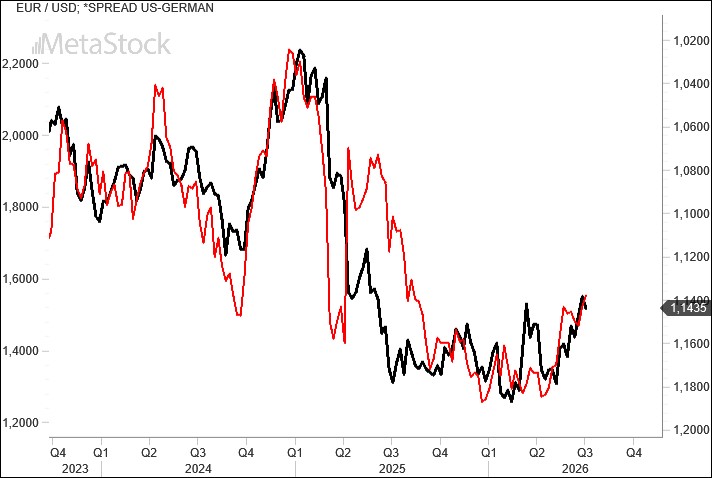
What stands out from the chart comparing EUR/USD, shown on an inverted scale, with the spread between 10-year U.S. and German government bonds, is the support the yield differential is providing to the greenback.
After bottoming near 125 basis points, the spread has climbed back above 150 basis points, a factor that has allowed the dollar to move close to the critical 1.14 support area against the euro. If the Fed and the U.S. economy continue to show a more constructive profile than the eurozone, the yield differential could prove decisive in triggering a break first below 1.14 and then below 1.12.
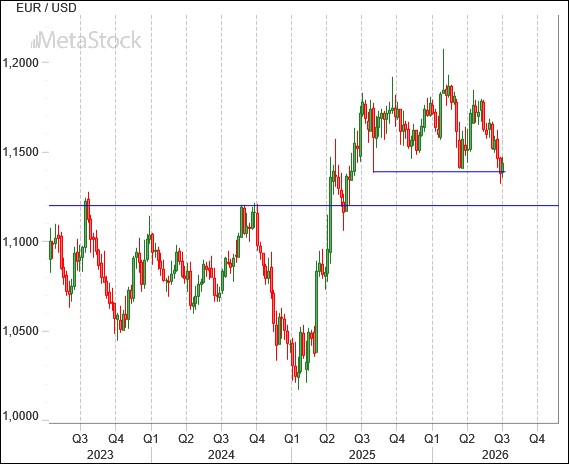
The daily chart we have been presenting for weeks now sends a clear message. The 1.14 support area is crucial from a medium-term perspective, and a break below it would point to a head-and-shoulders pattern that would be confirmed by a subsequent break of the 1.12 area.
At that point—and only at that point—the euro would be facing a decidedly negative phase. Caution is warranted, because from late September onward, the dollar typically enters a much more favorable seasonal period. For the euro, it would be preferable to enter that stretch well clear of the levels mentioned above.
Leave a Reply
You must be logged in to post a comment.