
- Trump is projecting confidence that the conflict with Iran is nearing an end, but Tehran is not backing down and oil prices are climbing again. Inflation is meanwhile moving higher in the U.S., with gasoline prices threatening to extend the Fed’s pause on rate cuts and, above all, create political headaches for Republicans ahead of the next midterm elections.
- Europe is still grappling with its dependence on fossil-fuel energy, forcing the European Central Bank to stay alert to the risk of renewed inflation flare-ups, with obvious implications for interest rates. Economic growth is likely to slow in the coming months.
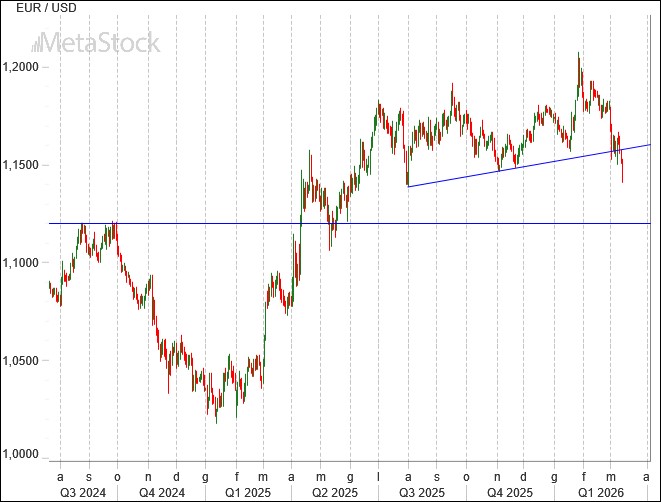
- EUR/USD is being weighed down by tensions in energy prices, the fading prospect of U.S. rate cuts, and the usual flight-to-quality dynamic. The first support levels at 1.15 have now given way.
Inflation: Signs of Movement
The conflict in the Persian Gulf remains a live issue, with Iran’s closure of the Strait of Hormuz preventing oil exports from other countries and keeping crude prices elevated. That has already prompted the first releases from strategic reserves by major consumer nations.
The situation remains highly complex. Iran’s response risks prolonging the crisis and widening the conflict, creating fresh tensions. China and the rest of Asia, the main destinations for Middle Eastern oil, are also increasingly concerned.
The U.S. inflation report for February did not trigger a major market reaction. Even though inflation rose to 2.4%, the increase had been expected, and attention is now focused above all on the effects the conflict could have on producer and consumer prices. Energy costs, starting with gasoline at the pump, are rising sharply. Trump can hardly afford to head into the midterm elections under these conditions, which is why he is trying to project reassurance.
Two-year inflation expectations are now approaching 3%, while five-year expectations are nearing 2.7%. The Fed’s 2% target looks increasingly out of reach, which is why the central bank is unlikely to make any move on rates this week. Not surprisingly, 10-year Treasury yields have pushed above 4.25%.
The dollar is beginning to sense that only a recession might bring rate cuts back onto the table, and it is starting to regain the upper hand.
In Europe, too, speculation is beginning to build around possible rate increases if inflation were to turn higher again after the ECB’s effective containment efforts in recent months.
EUR/USD Technical Analysis: A Decisive Break Lower
EUR/USD has now slipped through its first critical support levels. A clean break below 1.15 has immediate implications for the greenback and suggests a decline at least toward 1.12. A shift in that outlook could come from the Fed, should it formally signal a change in its stance on rates.
Recent days have seen U.S. bond yields move higher, helping fuel the dollar’s rebound, even in an environment shaped by demand for safety. From here, the euro needs to respond.
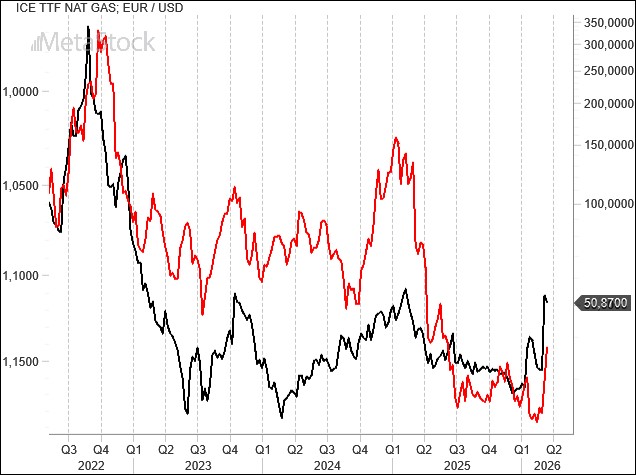
The spike in European natural-gas prices has been immediately reflected in the euro’s decline.
On an inverted chart scale, EUR/USD has in fact shown a near-perfect inverse correlation with natural-gas prices.
When energy costs rise, as they are doing now, the euro loses ground. That casts serious doubt on the prospect of seeing the euro move meaningfully higher in the coming months unless tensions ease quickly.

Leave a Reply
You must be logged in to post a comment.