
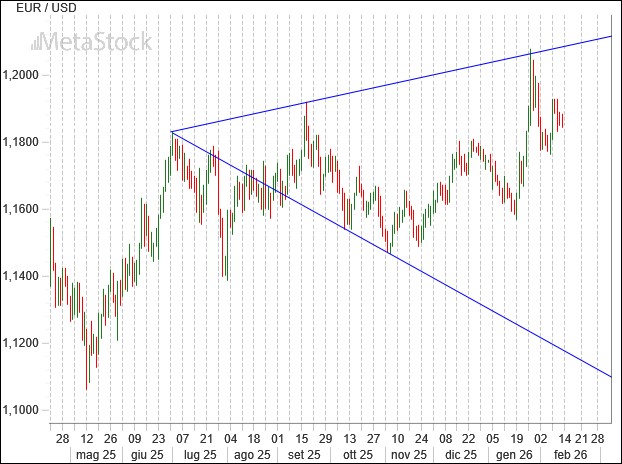
- The United States confirms a “jobless recovery” in its economic fabric, with January job creation beating expectations, but with a sharp downward revision to total new jobs across 2025. Inflation continues to cool, rising 2.4% in January.
- Europe remains mired in familiar political divisions between allies pushing for deeper federalism and others favoring stronger Brussels intervention in domestic affairs, particularly on defense and debt. The ECB stays on hold.
- EUR/USD once again challenges the 1.19 resistance before pulling back. The Dollar Index is also sitting on crucial support levels.
A Jobless Recovery in the United States
A mixed U.S. employment report allowed the dollar to fend off yet another assault on the 1.19 area.
With job creation coming in at 130,000 – double expectations – and unemployment falling to 4.3%, January’s labor market data gave the U.S. administration reason to smile. But there is a catch. The total number of jobs created throughout 2025 was sharply revised lower, reinforcing the view that the current expansion bears the hallmarks of a jobless recovery.
Another detail raised eyebrows: stripping out gains in healthcare, leisure, and government, employment actually declined. This dynamic has been in place since 2023 and clouds the outlook for future job growth, especially with the rapid rise of artificial intelligence reshaping labor demand.
Inflation provided the other key data point of the week. January consumer prices rose 2.4%, down from 2.7% in December – a slowdown that pushed U.S. 10-year Treasury yields back toward 4%.
Plenty of material, then, for the Federal Reserve. Markets continue to price in two rate cuts over the coming months, particularly with a new Fed Chair expected to take office from May onward. Investors currently anticipate the next rate cut in June.
Meanwhile, the U.S. House openly challenged President Trump by approving a resolution to abolish tariffs on Canada, thanks to the votes of six Republicans breaking ranks with the President. The resolution seeks to end the “national emergency” declared in February 2025 and represents the first visible crack in congressional support. With midterm elections approaching, the White House may have to reckon with waning electoral momentum.
EUR/USD Technical Analysis: Still No Breakthrough
A third consecutive higher high for EUR/USD, followed by yet another laborious bout of short-covering, underscores how reluctant markets remain to embrace the idea of a greenback trading beyond 1.20 against the euro.
The prospect of a more meaningful correction is beginning to gain traction. Should repeated attempts to clear resistance fail in the coming weeks, the pair could embark on a deeper pullback, potentially targeting 1.15. That said, the weekly close keeps alive the possibility of another run at resistance – particularly now that U.S. yields appear to be moderating.
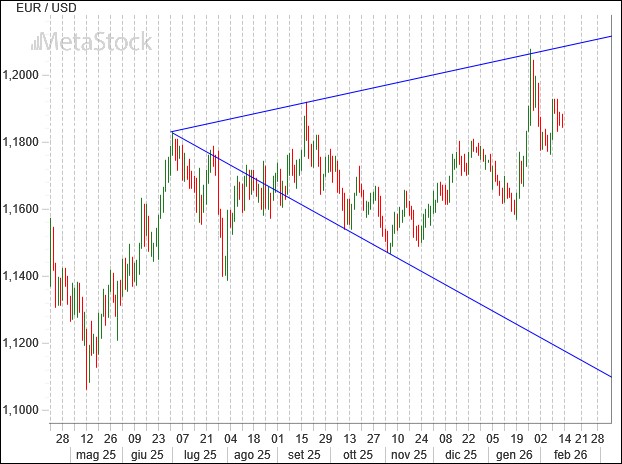
For EUR/USD, the 1.19-1.20 resistance band remains a formidable barrier, at least through month-end, when seasonal patterns tend to favor the dollar. At the same time, renewed strength in the yen is once again weighing on the greenback in the Dollar Index.
The ice beneath the dollar is thin. If 1.19 is the pivotal level against the euro, then 96.5–96.8 marks the critical threshold on the DXY.
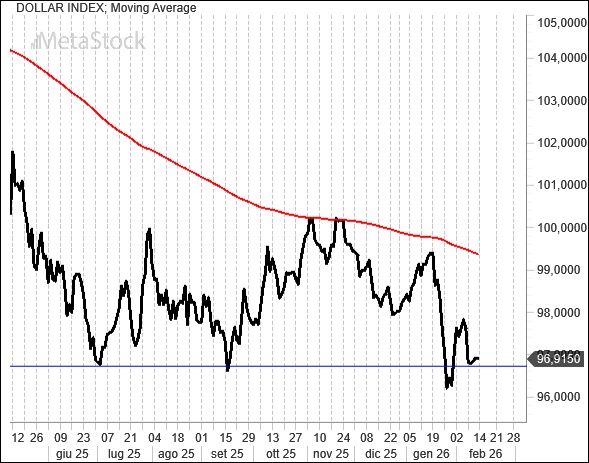
Last summer, markets tested this support twice, breaking it only marginally at the end of January amid the yen’s sharp slide. After a swift recovery, the index is once again hovering near that floor.
This time, however, a decisive break could prove fatal for the dollar’s broader uptrend.
Leave a Reply
You must be logged in to post a comment.