
- Trump continues to say that a deal with Iran is close, but the other side denies it. Talks are moving forward, as is inflation, which risks becoming for Trump on the campaign trail what it was for Biden. That risk could become dangerous if the Fed does not move on rates, especially after the latest labor-market data.
- The ECB is expected this week to raise interest rates by 25 basis points. Inflation is starting to bite, even as the economy holds up. Meanwhile, talk is growing louder about Ukraine and Canada as potential new members of the EU.
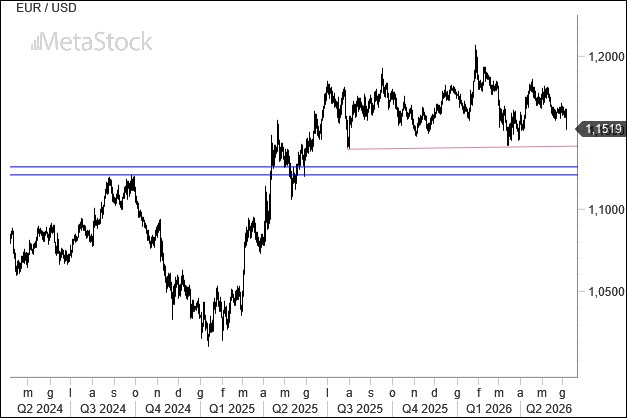
- EUR/USD ended the week converging toward 1.15, but the pair remains stuck in a trading range. The tech selloff is dollar-positive.
Inflation Risks Spoiling Trump’s Elections
On June 11, the ECB is expected to raise rates by 25 basis points, much to the delight of money-market fund holders, who nevertheless must also contend with inflation rising to 3.2% in May from 3% in April.
Core inflation also rose, climbing 2.5% from 2.2% in April, while services inflation advanced 3.5%, a sign that higher energy costs are already spreading more broadly through the economy.
While wage inflation remains contained for now, another source of concern is that the price components of PMI indexes across the eurozone’s largest economies are all pointing higher. That increases the probability that inflation in Europe will remain above 3% for longer than expected.
A similar argument can be made for the United States, as confirmed by the Fed’s recent Beige Book. In the PMI surveys, prices are among the liveliest subcomponents, and this could soon feed through into consumer inflation as well.
At that point, what will Warsh’s new Fed do? The new governor must also deal with stronger-than-expected employment data for May, with more than 170,000 new jobs created. The risk is that wages also start accelerating again, in which case the Fed will have little choice but to raise rates.
Meanwhile, the midterm elections are approaching, and Trump needs to settle the Iran issue so he can head into the autumn with lower gasoline prices and softer inflation. For now, equity markets are mainly pricing in excessive investment in the tech sector. Bonds, gold and bitcoin are not enjoying the backdrop, while oil prices appear to be stabilizing below $100 a barrel.
EUR/USD: What a Snooze
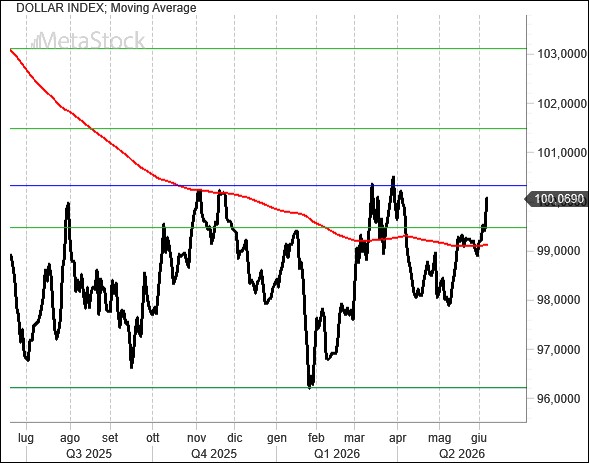
Driven above all by USD/JPY, which continues to test the Bank of Japan’s intervention zone around 160, the Dollar Index has turned its bow back toward the 100 mark. If the 2025 and 2026 highs are broken to the upside, the door would open to bullish summer scenarios for the U.S. dollar.
The trading range is clear, but the dollar’s ability in May to avoid sinking into the lower end of that range was an interesting signal. It suggests that the conditions may not yet be in place for a falling dollar. Despite expectations of an ECB rate increase, the euro also seems unable to advance. Is the market starting to think that the Fed will have no choice but to raise rates?
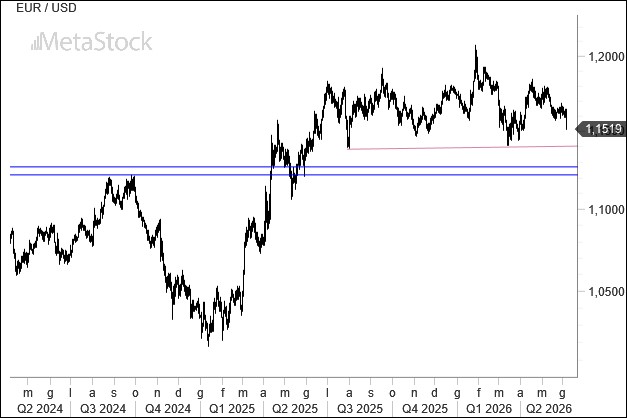
As for the bearish reversal signal on EUR/USD, we now have little doubt. Below 1.14, the bearish head-and-shoulders pattern would be complete. At that point, the technical setup of a currency pair heading toward 1.10, or perhaps even slightly lower, would be in place.
Last Friday, the market delivered a strong signal. Confirmation is still missing, however, and it may be appropriate to maintain a neutral approach for now.
Leave a Reply
You must be logged in to post a comment.