
- America is weighing the duration and consequences of a war with Iran that is, for now, adding to inflationary pressure, fueling uncertainty over interest rates and complicating Trump’s path toward the midterm elections.
- Europe is grappling with soaring energy costs and rising yields at the long end of the curve, a factor that so far has done little to strengthen the euro.
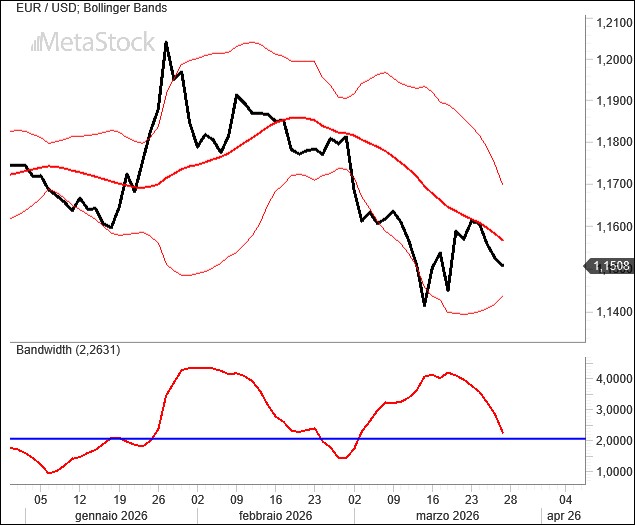
- EUR/USD continues to hover near the 1.15 area, confirming that geopolitical uncertainty remains supportive of the U.S. dollar.
Trump Faces a War of Nerves
The market stalemate is plain to see. The war risk Trump has brought to the Middle East, along with the closure of the Strait of Hormuz and, above all, the danger facing production facilities across the Gulf, has triggered a chain reaction in crude oil and gas prices and supplies. Prices have moved toward the $100-a-barrel mark, while uncertainty remains high over near-term supply volumes.
Economic growth is at risk, but inflation may be the bigger concern in the months ahead. Not only gasoline prices, but also the materials used across a wide range of industries are being affected by these rising costs. From agricultural fertilizers to plastics, much revolves around oil prices, which remain a basic input in production.
For Donald Trump, it is imperative to contain rising consumer prices as well as geopolitical uncertainty before the midterm elections, with polls showing a sharp drop in the former president’s popularity. The question now is whether the negotiations under way will produce any concrete solution with Iran in the near term.
With a change in leadership at the Federal Reserve, Trump’s hope of pushing for immediate rate cuts to support a recovery in the housing market is unlikely to materialize. That, too, would do little to help him politically, with mortgage rates still above 6%.
Europe, meanwhile, is also facing the risk of slower growth and higher inflation. Market rates are already moving in that direction, with yields on 10-year German Bunds above 3% and Italian yields above 4%. In the U.K., rates have climbed to 5% as markets bet the Bank of England will no longer cut rates.
Amid this stalemate, the dollar is holding its ground, pressuring resistance at 160 in USD/JPY and support at 1.15 in EUR/USD.
EUR/USD: Support Is Holding for Now
We are not yet seeing an outright volatility spike in EUR/USD, but the past few days have clearly brought some movement, first with a break lower and then with a rebound. Even so, the Bollinger Bands still appear to be guiding traders toward a bearish stance on EUR/USD. The hurdle for the euro remains the middle Bollinger Band, the 20-day average, at 1.16, which has for the second time capped the euro’s rebound. The downward slope still points to a constructive phase for the greenback.

A full-fledged technical battle is now underway in EUR/USD. After breaking below support at 1.16, it looked as though the dollar might be opening the door to a deeper move toward 1.12. The euro’s response, however, has produced a pullback that is still in progress and could determine the direction of the coming weeks. A renewed move lower would confirm that this is merely a pullback, reopening bearish prospects. A close above 1.16, by contrast, would raise the possibility of a return toward 1.18/1.20 in April.

Leave a Reply
You must be logged in to post a comment.